 Fr
Blog
Home BLOG
Social Contracts: PIFEVA's Answer to Gender-Based Violence and the Denial of Land
2026-04-30
Social Contracts: PIFEVA's Answer to Gender-Based Violence and the Denial of Land
In the DRC, the law guarantees equal access to land. Custom decides otherwise. PIFEVA introduced and scaled up an unprecedented form of intervention: written social contracts, translated into local languages and signed by communities across North and South Kivu.
Congolese law recognises equal access to land for all citizens in principle. In practice, customary law usually prevails, and it remains anchored in patriarchal norms that systematically favour men in accessing, controlling and transmitting land. Women's recognised right to land ownership is therefore violated in many cases.
This must be named for what it is: not merely an inequality, but a form of violence. Denial of resources — restricting a woman's access to assets, and to land in particular — is a recognised form of gender-based violence. The social contract approach was born from that observation.
A written document, translated and signed
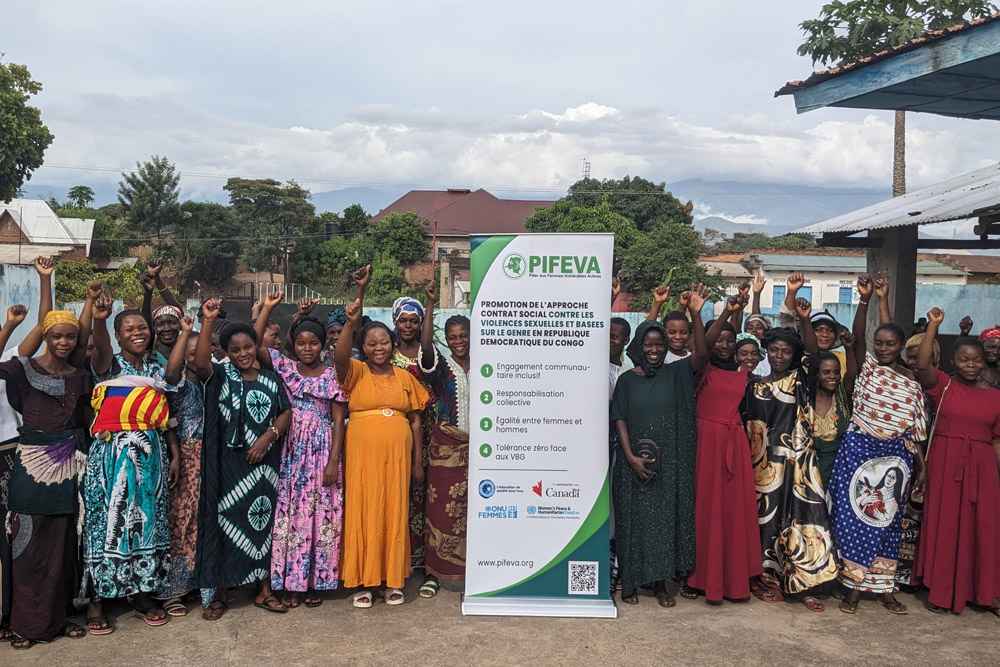
Social contracts are written documents, translated into local languages, whose terms are designed to remove the main barriers preventing women from developing climate adaptation initiatives — starting with access to land. They cover the protection of young women and Indigenous and vulnerable women against gender-based violence, include access to the management of biodiversity and natural resources, and promote the prevention and peaceful resolution of conflict.
Four objectives
• Reduce all forms of gender-based violence that prevent women and girls from taking decisions on natural resource management and climate adaptation
• Remove the obstacles preventing girls and women from accessing and enjoying their rights on the same terms as men
• Mobilise the community to end the violence to which women and girls are subjected
• Mobilise authorities, as duty bearers, to guarantee the equitable application of rights and to promote the prevention and peaceful resolution of conflict
Why it works
The strength of the approach lies in its mechanism: it places community responsibility at the centre of the response and establishes clear social accountability around public commitments. A social contract is not one more awareness session; it is a commitment signed by local authorities and influential figures, enforceable before the community, covering the protection of Indigenous women and girls in their access to and use of agroforestry resources.
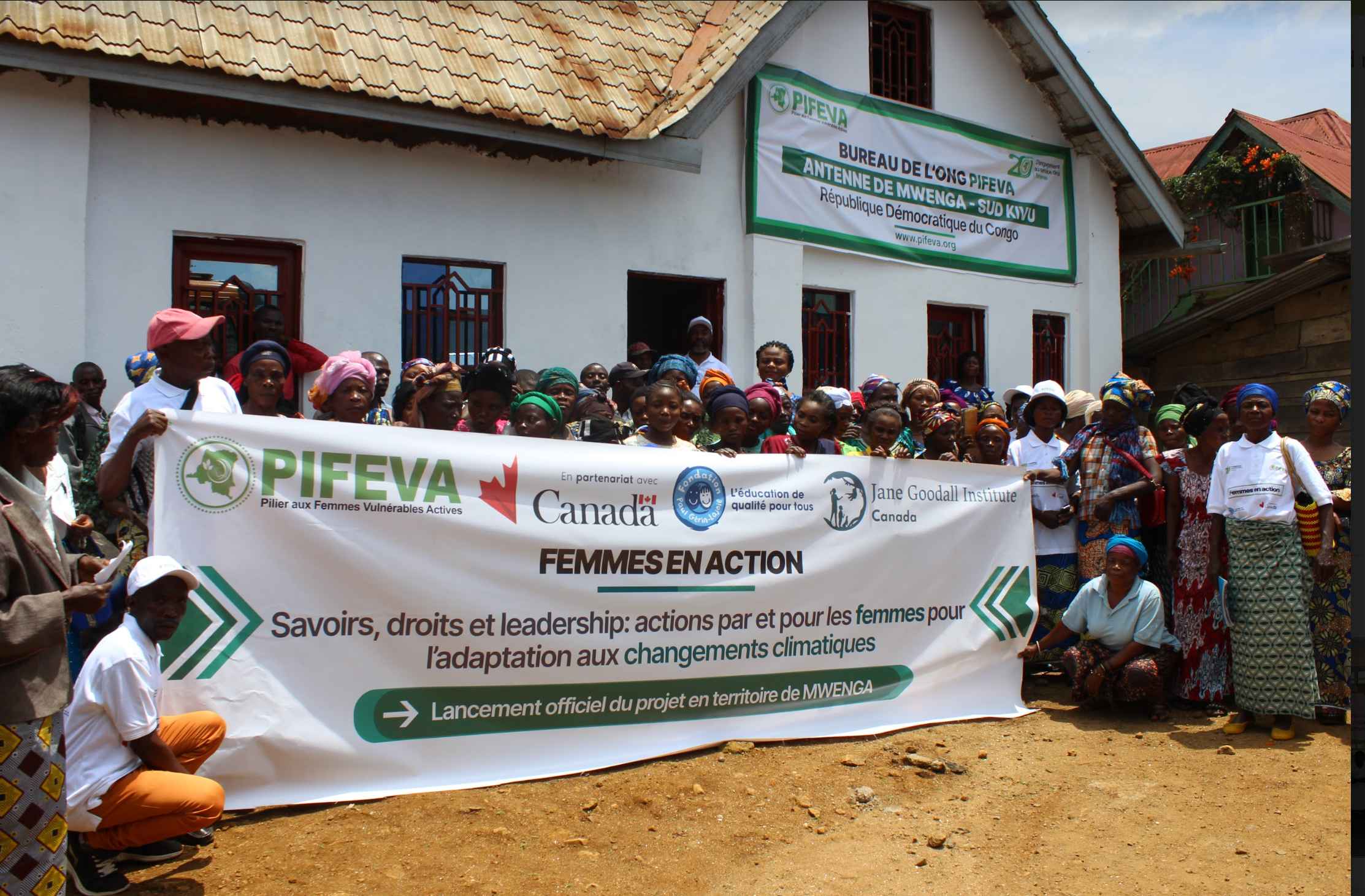
Under the Women in Action project in Mwenga, these social contracts were deployed alongside awareness campaigns and SGBV prevention training that reached 1,278 people, with dedicated sessions for local authorities and for men, and frontline response from Local Units against Sexual and Gender-Based Violence.
« The social contract approach strengthens the decision-making power and influence of women, girls and vulnerable Indigenous people in promoting and defending their rights. »
— PIFEVA
THE APPROACH AT A GLANCE
2 provinces covered: South Kivu and North Kivu
1,278 people reached by associated prevention work
243 men engaged as positive role models
Local languages contracts are translated so all can own them
Recent activities
.jpeg)
Similar articles
Our partners








.png)